

Panel Publishes First-Ever Clinical Guidelines for Home Oxygen Therapy in Children
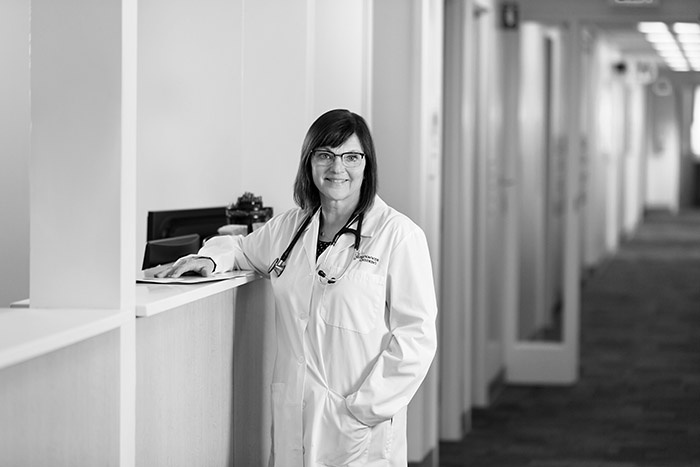
"Many of our patients with pulmonary concerns may use home oxygen therapy at some point in their treatment. We’re proud of Dr. Hayes’ leadership in bringing these important recommendations to providers."
– Karen S. McCoy, MD, Division Chief, Pulmonary Medicine
The American Thoracic Society (ATS) authorized a panel of experts to develop the first national clinical practice guidelines for home oxygen therapy in children, and published the recommendations in 2019.
“Home oxygen is often needed for children with chronic lung and pulmonary vascular diseases,” says Don Hayes, Jr., MD, MS, MEd, chair of the working group and lead author on the document. “However, there is a striking lack of empirical evidence regarding its implementation, monitoring and discontinuation in children. These guidelines, developed by a panel of highly respected experts, offer an evidence-based approach to using home oxygen to benefit pediatric patients.”
To assist in determining which children should receive home oxygen, the expert panel completed a meta-analysis and defined chronic hypoxemia in the pediatric population.
The following recommendations are based on the panel’s confidence in the estimated effects, the balance of benefits and potential harms, patient values and preferences, and cost and feasibility. The report is in the American Journal of Respiratory and Critical Care Medicine.
The guidelines strongly suggest the use of home oxygen therapy for the following patient populations:
- Children with cystic fibrosis complicated by severe chronic hypoxemia
- Children with bronchopulmonary dysplasia complicated by chronic hypoxemia
- Children with sleep-disordered breathing complicated by chronic hypoxemia who cannot tolerate treatment
- Children with sickle cell anemia complicated by chronic hypoxemia
- Children with pulmonary hypertension without congenital heart disease complicated by chronic hypoxemia
- Children with interstitial lung disease complicated by severe chronic hypoxemia
Home oxygen therapy is conditionally recommended, or applicable in most situations, in the following cases:
- Patients with cystic fibrosis and mild hypoxemia and dyspnea on exertion
- Patients with sleep disordered breathing complicated by severe nocturnal hypoxemia who cannot tolerate positive airway pressure therapy or are awaiting surgical treatment of the disordered breathing
- Patients with sickle cell disease complicated by severe chronic hypoxemia
- Patients with interstitial lung disease with mild chronic hypoxemia and either dyspnea on exertion or desaturation during sleep or exertion
Critical to optimal benefit, oxygen equipment should be an appropriate size for children and function properly, the guidelines say. Oxygen therapy should be titrated to maintain an oxygen saturation level greater than 90% at all times and providers should use pulse oximetry to titrate and monitor therapy.
CITATION:
Hayes D Jr, Wilson KC, Krivchenia K, Hawkins SMM, Balfour-Lynn IM, Gozal D, Panitch HB, Splaingard ML, Rhein LM, Kurland G, Abman SH, Hoffman TM, Carroll CL, Cataletto ME, Tumin D, Oren E, Martin RJ, Baker J, Porta GR, Kaley D, Gettys A, Deterdine RR, American Thoracic Society Assembly on Pediatrics. Home Oxygen Therapy for Children: An Official ATS Clinical Practice Guideline. American Journal of Respiratory Critical Care Medicine. 2019 Feb 1;199(3):e5-e23.


